What is a Virtual College Admissions Advisor?
A virtual college admissions advisor (sometimes called admissions advisor, admission officer, or online admissions counselor) helps prospective students through program selection, application steps, documentation, financial-aid/tuition options, and onboarding — all delivered remotely via phone, email, chat, video interviews and CRM tools. Many roles combine recruitment, advising, and sales-style outreach to meet enrollment targets.
—
Typical duties & day-to-day
Respond to inbound inquiries (phone, email, web chat) and make outbound follow-ups.
Qualify leads, explain program fit, and advise on admission requirements and deadlines.
Review application documents and guide applicants through next steps.
Use CRMs and student-information systems to log communications and track pipeline.
Run virtual info sessions, webinars, and one-on-one video interviews.
Meet enrollment or conversion targets and report on metrics.
These responsibilities are consistent across post-secondary institutions, private career colleges and some university roles.
—
Pay, hours and job types (remote/hybrid/on-site)
Salary ranges vary by institution type, location and seniority. Recent Canadian market figures show average admissions-advisor pay around CAD $49k–$62k/year, with hourly and contract remote roles paying anywhere from roughly CAD $18–30/hr depending on region and level. Part-time and commission/bonus structures are common in private colleges. If you’re targeting remote listings, there are consistently dozens to hundreds of remote/virtual admissions roles posted on major job boards.
—
Who hires — institutions & work settings
Public colleges and universities (academic advising, admissions teams — sometimes hybrid or remote).
Private career colleges and training providers (heavy recruitment focus; many remote positions).
EdTech companies and test-prep/consulting firms offering enrollment programs.
Recruitment agencies that place advisors with institutions.
Large job aggregators and employer pages frequently list remote openings; set alerts on LinkedIn and Indeed for “virtual admissions” or “remote admissions advisor.”
—
Minimum qualifications & desirable skills
Education: many roles require a college diploma or bachelor’s degree; some accept relevant experience in lieu of formal credentials. Official occupation profiles list post-secondary education or relevant on-the-job training as common requirements.
Skills: strong communication, CRM familiarity, comfort with targets/metrics, document review ability, basic knowledge of student funding (e.g., provincial student aid), and cross-cultural sensitivity for international applicants.
Extras that help: previous admissions/academic advising experience, call-center or sales experience, fluency in an additional language, and experience with virtual events/webinars.
—
Where to search (quick links & tips)
Indeed Canada — broad listings for admissions and remote education roles.
LinkedIn Jobs — good for “virtual” or hybrid roles and networking with recruiters.
Glassdoor / ZipRecruiter — for market salaries and company reviews.
Government Job Bank (Job Bank Canada) — official occupation profiles and province-level postings for admissions/officer roles.
Tip: Create job alerts on Indeed/LinkedIn with keywords: “virtual admissions”, “remote admissions advisor”, “admissions counselor”, “admissions officer” and filter by Canada or specific provinces. Check college and private-school career pages directly (they often post before aggregators).
—
Sample CV bullets for remote admissions advisor
Managed a pipeline of 200+ prospective students using [CRM name]; increased conversion by 18% YoY through personalized outreach.
Hosted weekly virtual info sessions and one-on-one video consultations for prospective applicants.
Reviewed application documentation and advised students on funding options and timelines.
Met/exceeded monthly enrollment targets while maintaining high satisfaction scores.
—
Interview & application checklist
1. Tailor resume to show measurable outcomes (leads converted, sessions run, systems used).
2. Prepare 2–3 short case stories (lead qualification, handling a difficult applicant, improving an enrollment metric).
3. Demonstrate familiarity with CRMs, video-conferencing platforms, and digital outreach.
4. Ask about KPIs: admissions funnel metrics, expected call volume, commission/bonus structure, training and schedule flexibility.
5. If applying remote, show you have a reliable workspace, high-speed internet, and privacy for calls.
—
Remote work setup recommendations
Quiet, well-lit space for video interviews.
Headset with noise cancellation and backup internet (mobile hotspot) if possible.
Install and test common tools (Zoom/Teams, Google Workspace, the employer’s CRM) before interviews.
—
Next steps & useful official resources
Browse current Canadian listings on Indeed Canada and LinkedIn Jobs to see live remote admissions roles.
Check the Job Bank (Government of Canada) for occupational profiles, wages and provincial job postings for admissions officers and educational counsellors.
Compare salary data and company reviews on Glassdoor and wage summaries on ZipRecruiter to set pay expectations.
—
Final thoughts
Virtual college admissions advising is a strong option if you enjoy student-facing work, advising on pathways, and working in a goal-driven environment. The market in Canada offers a mix of public-sector stability and private-sector flexibility — and remote roles are widely available if you search the right boards and tailor your application to show measurable results and CRM experience.
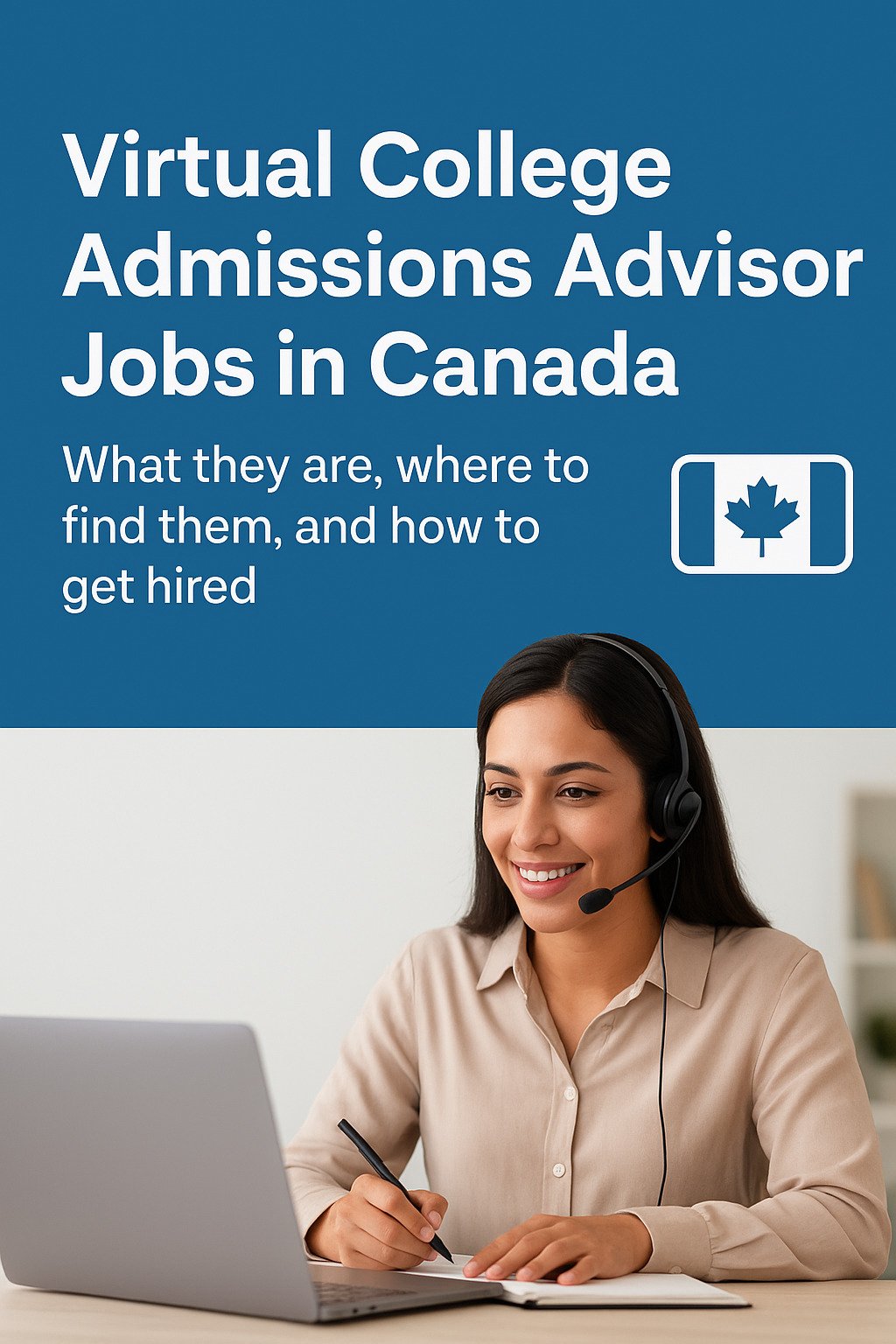
Virtual College Admissions Advisor Jobs in Canada — What they are, where to find them, and how to get hired

·
Leave a Reply